

Stroll down nearly any block in Manhattan, and the metallic tells the constructing’s age. Bronze doorways have gone brown, brass kick plates have dulled, and iron railings present rust on the joints.
That put on is regular. What issues is the way it’s handled, as a result of the flawed cleansing technique can erase extra historical past in a day than many years of climate did.
New York’s Buildings Are Previous
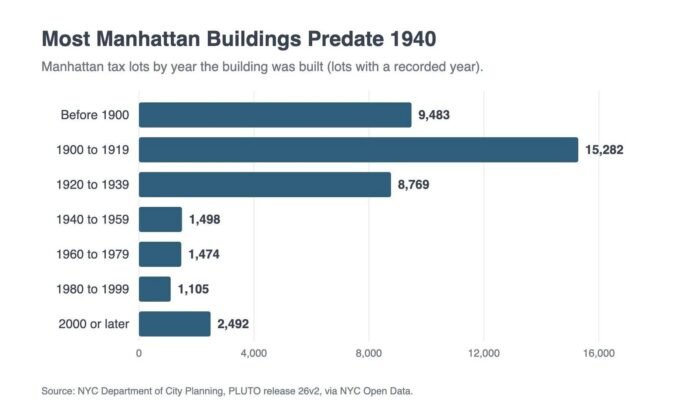
The age of the housing and workplace inventory explains why this comes up so typically. NYC Division of Metropolis Planning’s PLUTO knowledge, launch 26v2, data a yr constructed for about 40,100 Manhattan tax tons.
About 84 p.c of Manhattan tons with a recorded yr had been constructed earlier than 1940.
About 33,500 of them, or roughly 84 p.c, had been constructed earlier than 1940. The most important single group dates from 1900 to 1919, and almost 9,500 tons predate 1900.
A lot of these buildings are additionally protected. Town’s Landmarks Preservation Fee says New York Metropolis has greater than 38,000 landmark properties, most of them in 157 historic districts and extensions, together with 1,470 particular person landmarks.
Why Steel Breaks Down
Every metallic ages otherwise. Brass and bronze tarnish and darken with publicity, whereas iron rusts and, left alone, can lose materials over time.
The Nationwide Park Service’s Preservation Temporary 27, on architectural forged iron, describes how briskly that may occur. It says rusting happens quickly when forged iron is uncovered to moisture and air, and that the minimal relative humidity wanted to advertise rusting is 65 p.c, decrease when corrosive brokers are current.
The identical transient flags an issue that catches homeowners off guard. Galvanic corrosion can happen when two dissimilar metals react within the presence of an electrolyte, akin to salt-containing water. A metal fastener in a bronze becoming, or a careless restore with the flawed metallic, can begin bother that odd cleansing is not going to repair.
The Rule for Cleansing: Gentlest First
The core precept for historic supplies is easy. The Secretary of the Inside’s Requirements for Rehabilitation say that remedies akin to sandblasting that trigger harm to historic supplies shall not be used, and that floor cleansing shall be undertaken utilizing the gentlest means doable.
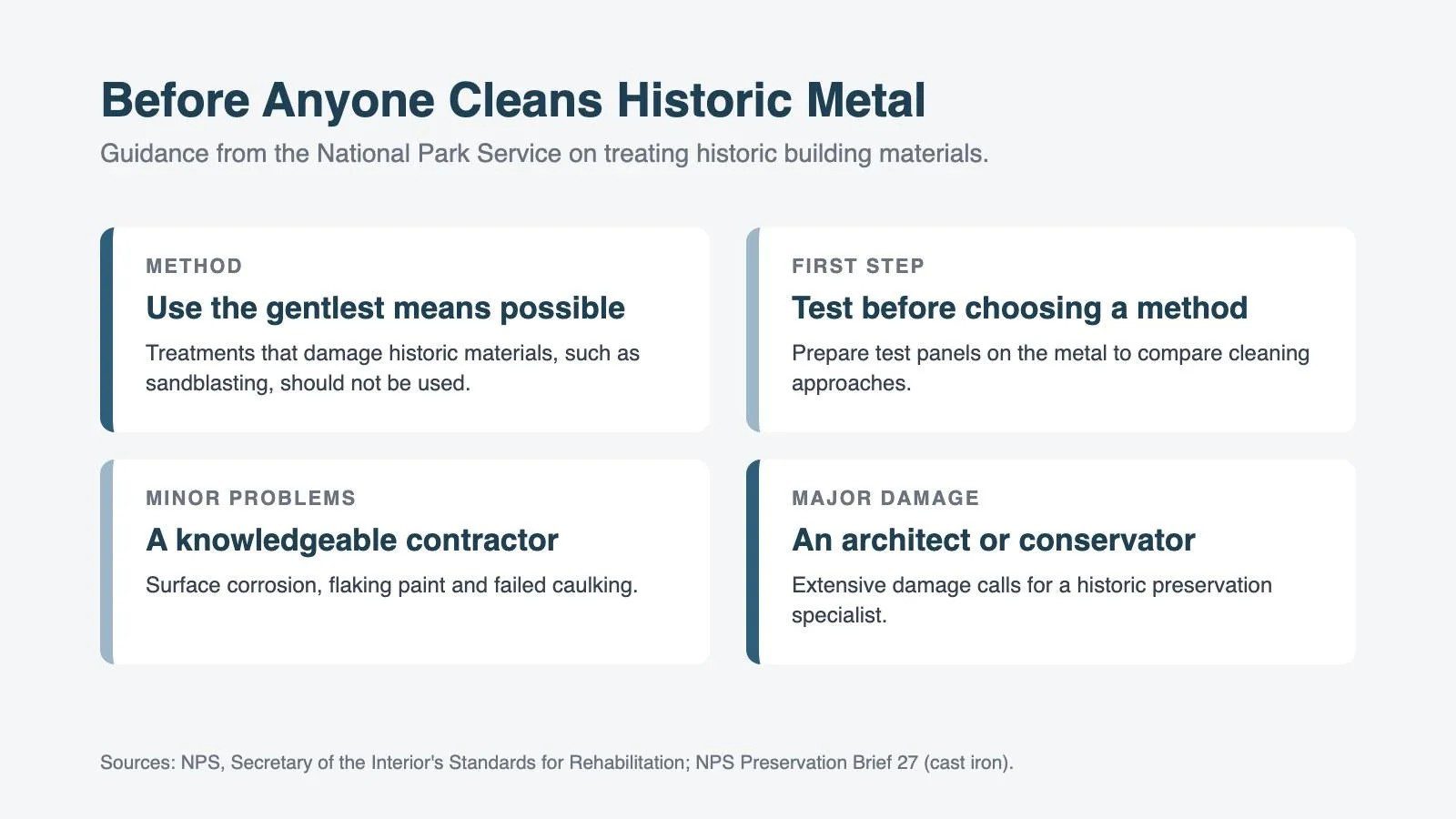
Nationwide Park Service steerage on treating historic constructing metallic.
Preservation Temporary 27 provides a sensible step for iron. Earlier than selecting a course of, put together take a look at panels on the metallic to match how effectively totally different cleansing approaches work.
It additionally warns in opposition to shortcuts that look environment friendly. Moist sandblasting, the transient notes, causes instantaneous floor rusting on forged iron and drives water deep into open joints.
Cleansing Is Not Sharpening
House owners routinely use the phrases interchangeably, however they describe totally different work. Cleansing and upkeep shield the present end, whereas sharpening removes materials to create a brand new one.
That distinction issues on previous metallic. Each aggressive polish removes extra of the unique floor, so a constructing cleaned and guarded on a schedule tends to wish heavy refinishing much less typically.
Protecting coatings are a part of the job. A transparent lacquer or wax slows tarnish on brass and bronze, but it surely wears down with climate and dealing with and must be renewed earlier than it fails.
Harm You Can’t See From the Sidewalk
Not each downside exhibits on the floor. Preservation Temporary 27 describes graphitization, a much less frequent type of corrosion that happens within the presence of acid precipitation or seawater.
Because the iron corrodes this manner, it retains its look and form however turns into structurally weaker. The transient says it tends to seem the place forged iron has been left unpainted for lengthy durations, or the place caulked joints have failed, and acidic rainwater has labored on the iron from behind.
The take a look at is blunt. Scraping by the floor with a knife reveals crumbling iron beneath, and the place graphitization is intensive, changing the broken ingredient is normally the one repair.
That’s the reason the transient requires a detailed bodily inspection of each part of the ironwork, together with bolts, fasteners, and brackets. On a facade, that usually means scaffolding or a mechanical raise fairly than a glance from the road.
When to Name Which Type of Assist
The size of the harm decides who ought to deal with it. Preservation Temporary 27 says that if the issues are minor, akin to floor corrosion, flaking paint, and failed caulking, a property proprietor might be able to work instantly with a educated contractor.
For main bother or intensive harm, the transient recommends an architect or conservator who focuses on historic buildings. Landmark standing provides one other layer, since work on designated properties is regulated by the Landmarks Preservation Fee.
Just a few questions assist kind out the primary name:
- Is the metallic boring and soiled, or is it cracked, pitted, or lacking items?
- Are there indicators of two totally different metals touching the place corrosion is concentrated?
- Is the constructing a delegated landmark or inside a historic district?
- Has anybody examined a cleansing technique on a small space first?
What Routine Care Seems Like
For many buildings, the reply is upkeep, not a dramatic restoration. Within the New York space, Steel Man Restoration is one firm that describes architectural metallic cleansing and upkeep this manner.
The corporate says most entrances and lobbies profit from a scheduled clear and a coating verify a few times a yr, with high-traffic and street-level metallic typically needing extra. In September 2026, it refinished and clear-coated a brass entranceway in Newark, New Jersey, masking the glass and stone whereas the work was performed.
The place Constructing Steel Care Is Heading
Inventory received’t get any youthful. With most Manhattan tons constructed earlier than 1940 and tens of 1000’s of landmark properties throughout the town, older metallic will maintain needing consideration.
The buildings that maintain their character would be the ones handled gently and on a schedule. Cleansing that protects the unique floor and repairs matched to the actual downside maintain a century-old entrance trying like itself.

